

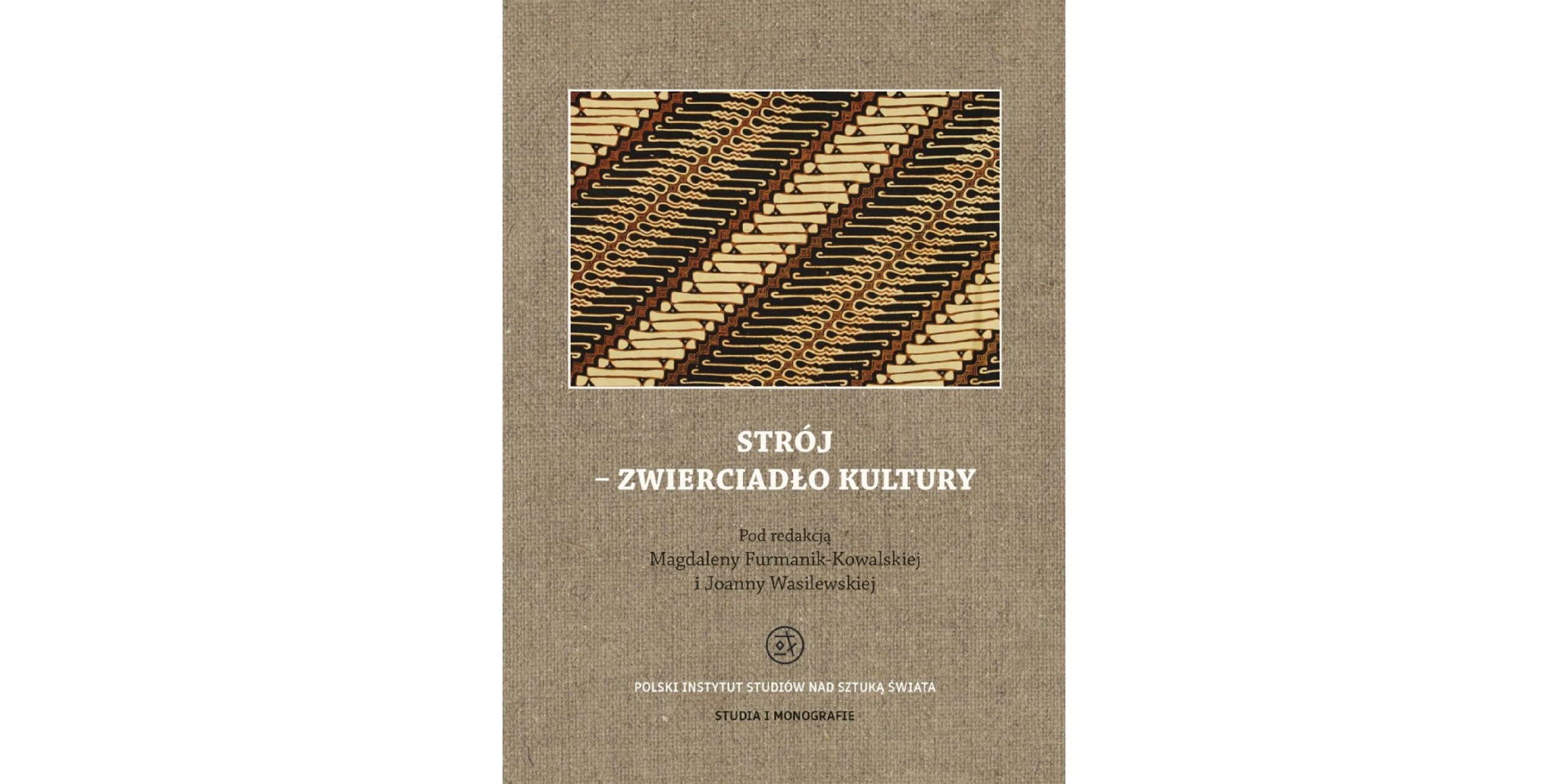
T. 2 – Strój – zwierciadło kultury / Costume – mirror of culture, MAGDALENA FURMANIK-KOWALSKA & JOANNA WASILEWSKA (ed.)
Spis treści / Contents: Joanna Wasilewska, Wstęp / Introduction; HALINA WITEK-TYLCZYŃSKA, Kim jestem / skąd jestem? Czytanie stroju / Who am I / where I am from? Interpreting outfit; ANNA WYSZYŃSKA, Strój – dzieło sztuki? / Dress = artwork?; BEATA BIEDROŃSKA-SŁOTA, Od pelotte do kontusza – o ubiorach i ich znaczeniach / From pelotte to kontusz – about costumes and theirs significance; KATARZYNA WAGNER, Czy szata zdobi człowieka? O stroju europejskich monarchow przełomu XVII i XVIII wieku / Do the clothes make the man? European monarchs clothes / clothing in the 17th and 18th century; ZBIGNIEW CHMIEL, Strój mieszkańcow Syberii okiem Sarmatów – ubiory poddanych cara w świetle dwoch polskich pamiętników szlacheckich / Garb of the Siberian inhabitants through eyes of Sarmatians – outfit of Tsar’s subjects in the light of two Polish noblemen memoirs; ANNA MOŻDŻYŃSKA-NOWOTKA, Pochwała kostiumu, czyli geneza mody dziecięcej / The eulogy of costume or the origin of children’s fashion: inspirations and mechanisms; MARCIN RADWAN, (Do)strojony świat filmow Jamesa Ivory’ego / The stylish world of James Ivory’s movies The stylish world of James Ivory’s movies; ANNA LEBET-MINAKOWSKA, Ubiór jako wyznacznik żydowskości i znak przynależności religijnej / Dress as a determinant of Jewishness and a sign of religious affiliation; AGATA KONDRAT, Tradycyjny strój żydowski jako odzwierciedlenie kontaktow kulturowych żydowsko-polskich / The traditional Jewish garment as a mirror of intercultural Jewish-Polish contacts; ALEKSANDRA KAJDAŃSKA, Cheongsam – czytając ubior. Pochodzenie, kreatorzy, innowacje / Cheongsam – reading the dress. History, creators and innovations; MARTA MAZUREK, Symbolika stroju kobiecego w filmie Zhanga Yimou „Zawieście czerwone latarnie” / The symbolism of female costumes in Zhang Yimou’s Raise the Red Lantern; MAGDALENA FURMANIK-KOWALSKA, Rola kimona we współczesnej sztuce artystek japońskich / Kimono in the contemporary Japanese women art; KLAUDIA ADAMOWICZ, Istota i znaczenie Lolita Fashion / The essence and the meaning of Lolita Fashion; MARIA SZYMAŃSKA-ILNATA, Batik jako element stroju Jawajczyka / Batik as an element of clothing of Javanese people; DOROTA KAMIŃSKA-JONES, Strój jako wyznacznik statusu kobiety w Indiach / A woman’s attire as an indicator of her status in India; PAULINA NIECHCIAŁ, Strój jako ekspresja tożsamości religijnej. O współczesnych wyznawcach zaratusztrianizmu w Iranie / Zoroastrians and the creation of myth of pre-islamic Iran; DOMINIKA ŁUKOSZEK, O co walczy „muzułmańska Barbie”? / About what fights „Muslim Barbie”?; MARTA SKWIROWSKA, Juchitan de Zaragoza, miejsce, gdzie strój ma wiele twarzy / Juchitán de Zaragoza: place where the costume has many faces; PIOTR GRZEGORZ MICHALIK, Zinacantan: dzieje różu i błękitu / Zinacantán: a story of pink and blue.
Polski Instytut Studiów nad Sztuką Świata & Wydawnictwo Tako, Warszawa-Toruń 2014 ISBN 978-83-627737-39-0 (238 s.)