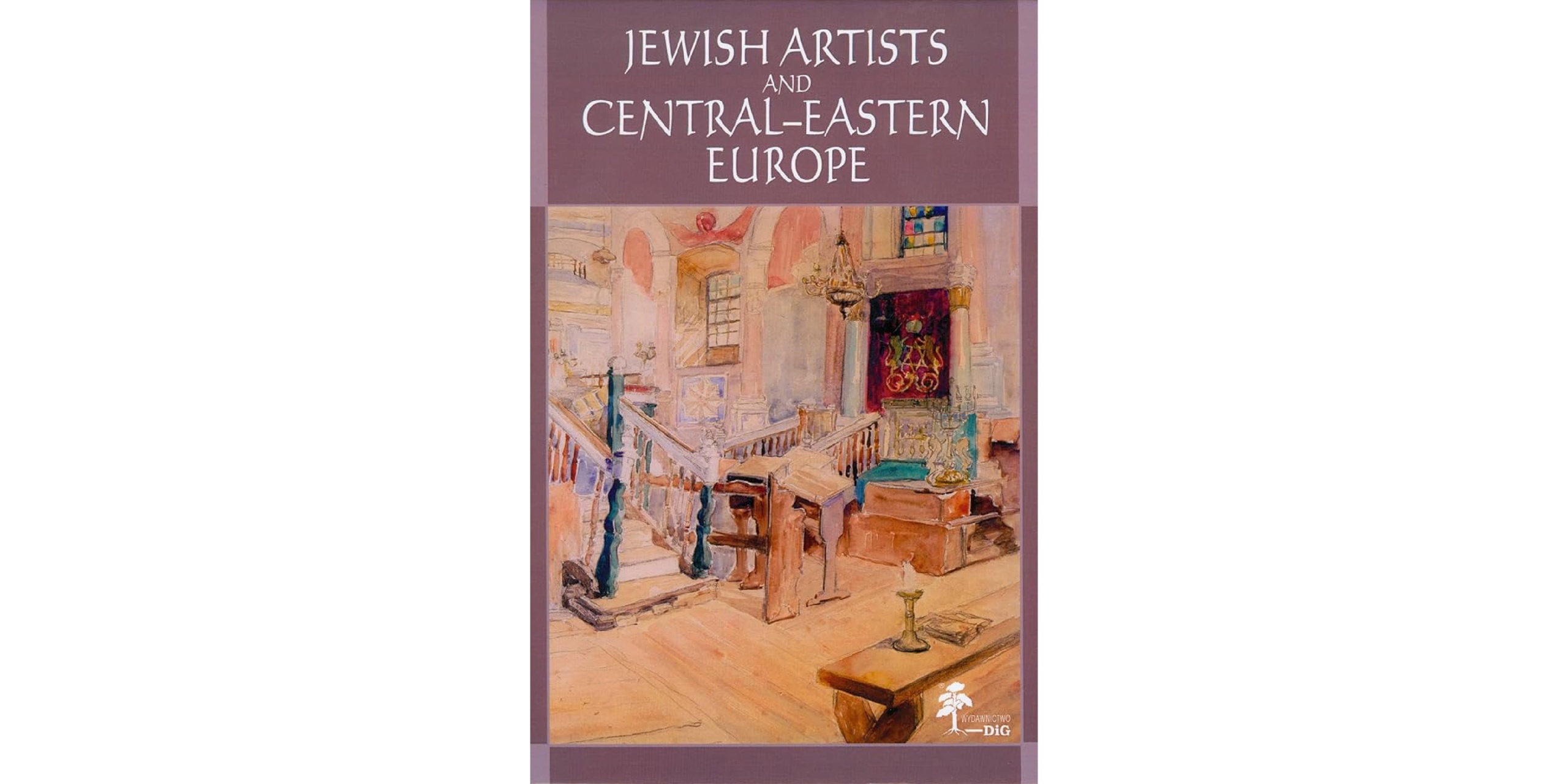
Vol. III – Jewish artists and Central-Eastern Europe from the 19th century to the second world war, JERZY MALINOWSKI, RENATA PIĄTKOWSKA & TAMARA SZTYMA-KNASIECKA (eds.)
Spis treści: JERZY MALINOWSKI, Jewish art in Central-Eastern Europe: the nineteenth century to the Second War World. Introduction; SZYMON RUDNICKI: Jews in Poland between the two World Wars; EWA GELLER, Yiddishland – Jewish Identity in East Central Europe; KAZIMIERZ & MARIA PIECHOTKA, Architecture of Synagogues on the lands of the former Polish-Lithuanian Commonwealth, 15th – early 19th Century. History and State of Research; ELEONORA BERGMAN, Synagogues of Europe – still much to learn; Marcos Silber: The function of Kazimierz as lieu de mémoire in Yiddish Film in Interwar Poland; BRAHA YANIV, The Wall decoration in the Izaac Synagogue in Kazimierz District, Krakow: the first overall layer; ULF G. HAXEN, Yehuda Leib ben Eliyya Ha-Cohen’s Haggada. Copenhagen 1769. A Jewish Artist in the Making?; IWONA BRZEWSKA: The motif of Jerusalem in Jewish tapestry and ritual objects in Polish collections; WALDEMAR DELUGA, Jewish German graphic amulets from the eighteen century; ANNA LEBET-MINAKOWSKA, The “Spanier Arbeit” technique; MAŁGORZATA REINHARD-CHLANDA, Role of stained-glass windows in the architecture of progressive synagogues on the example of the „Temple” Synagogue in Krakow; DANIELA M. SCHMID, Besamim & Hasidim. The Sabbath soul and myrtle in Jewish mysticism and a selection of Eastern European spice boxes; SERGEY KRAVTSOV, Józef Awin on Jewish art and architecture; SAMUEL D. GRUBER, Polish Influence on American synagogue architecture; JULIA WEINER: “Zealots and dreamers aiming at something to which only millionaires and powerful nations can aspire”. The Ben Uri Art Society and its founders; IRINA SERGEYEVA, Destiny of Museum of the Jewish Historical and Ethnographical Society after 1917: MONIKA CZEKANOWSKA, Portrait of „biblical” women in Maurycy Gottlieb’s and Wilhelm Wachtel’s painting. A semiotic and an iconographic approach to the pictures of Judith and Salome; TAMARA SZTYMA-KNASIECKA, Jewish idiom in the art of Henryk Glicenstein; ARTUR KAMCZYCKI, Herzl’s portrait by Leopold Pilichowski. Meanings of the picture; NATASZA STYRNA, The influence of Zionist’s ideology on the Jewish artistic milieu in Krakow, 1904–1939; SARAH MCDOUGALL, From Warsaw to Whitechapel: an exploration of cultural and artistic identity in the early work of Alfred Aaron Wolmark (ca. 1876–1961); ARTUR TANIKOWSKI, Heralds of moderate modernity: Polish-Jewish-Polish artists in Catalonia; AVIGDOR POSÈQ, Jacques Lipchitz: sculpture as prayer; RACHEL DICKSON, Jacob Kremer (189–1962): British Modernism and the Central Eastern Jewish émigré experience 1913–1923; CAROL ZEMEL, Bruno Schulz’s Book of Idolatry: making Jewish art in Diaspora; ELEONORA JEDLIŃSKA, Jankel Adler – Hassidism and New Jewish Art; IGOR DUKHAN, El Lissitzky and the search for New Jewish Art (Smolensk – Vitebsk – Moscow – Berlin); GAIL LEVIN, Reflection on Lee Krasner and Jewish culture of Eastern Europe; EUGENY KOTLAR, Bezalel versus Kultur-Lige: approaches to Jewish revival; MAŁGORZATA STOLARSKA-FRONIA, Jewish Expressionism – a quest for cultural space; KEIT HOLZ, Max Silberberg’s commitment to modern art and Jewish culture in interwar Breslau; RENATA PIĄTKOWSKA, Not just writers… Artists at Tlomackie 13; VILMA GRADINSKAITĖ, Attitudes of interwar Lithuanian art critics towards Jewish art; AVIV LIVNAT, Arieh Merzer and the Warsaw’s interwar metaloplastics art scene; ANDRZEJ SZCZERSKI, Beyond modernity. Benedykt Jerzy Dorys’ photos of Polish-Jewish Kazimierz in the 1930s; MAYA BALAKIRSKY-KATZ, Rebbishe representation: pre-war Polish photography of Hasidic leaders; MAGDALENA TARNOWSKA, Art in the Warsaw Ghetto; ANNA MARKOWSKA, Reconstructing Community: Jonasz Stern’s art after the Holocaust; PIOTR JUSZKIEWICZ: Space and Memory. Oskar Hansen’s project of Auschwitz Monument; ZIVA AMISHAI-MAISELS, Disappearance of the identity of the Holocaust victim in Art.
Wydawnictwo DiG, Warszawa 2010
ISBN 978-83-7181-655-0 (418 pp., LXXXII color ills.)