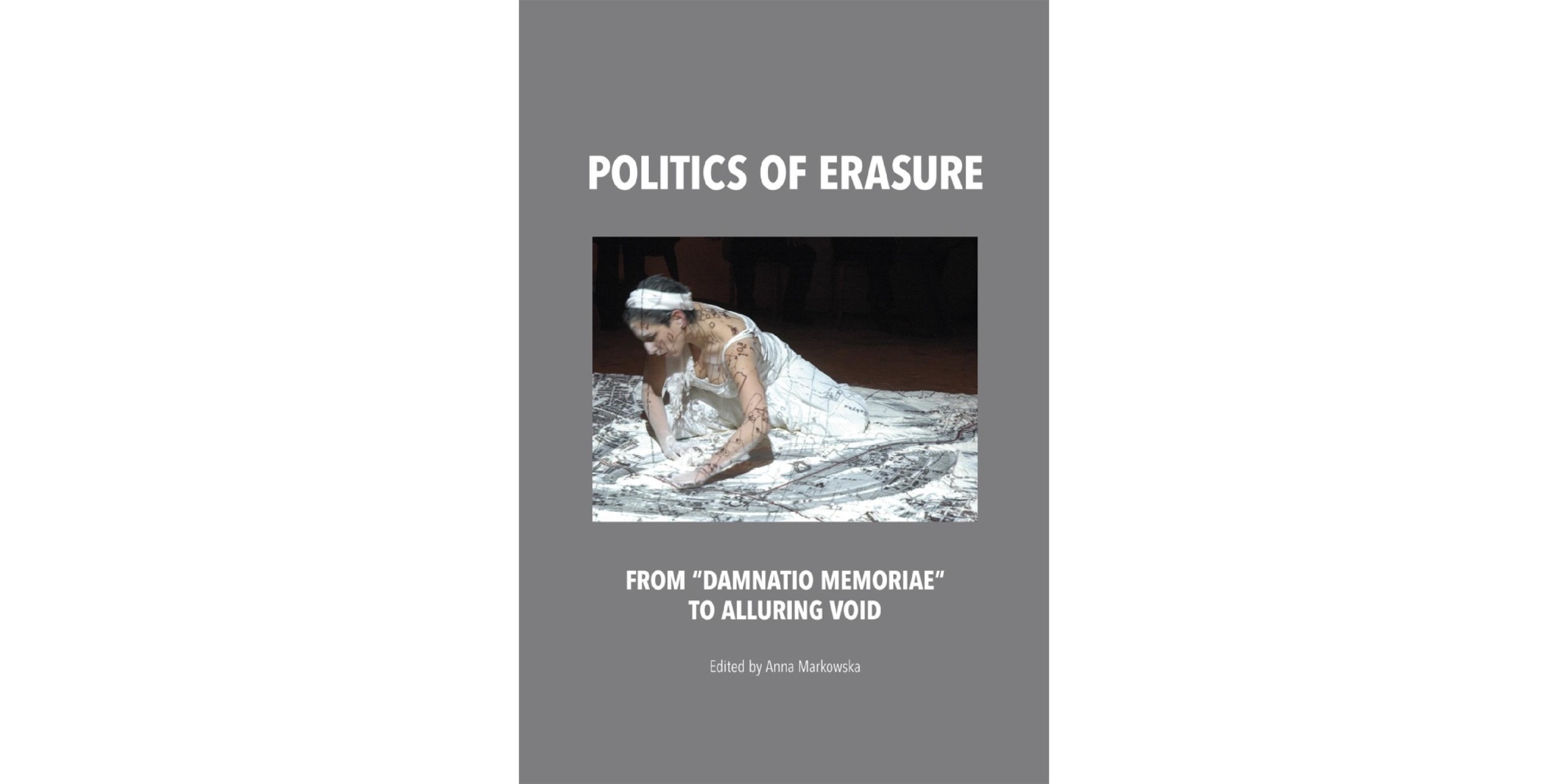
Vol. XIII – Politics of erasure. From “damnatio memoriae” to alluring void, ANNA MARKOWSKA (ed.)
Contens: ANNA MARKOWSKA, Introduction; DAMNATIO MEMORIAE – OBLIVION AS CONDEMNATION TO DEATH: AGATA KUBALA, Damnatio memoriae and Roman imperial art; ANNA GUT, The condemnation of memory in the modern epitaphs of Central Pomerania; JOANNA FILIPCZYK, Fine arts in the context of the “degermanization” in the region of Opolian Silesia after 1945; PIOTR BERNATOWICZ, Removal of Communist monuments: obliteration of the past or healing the memory?; FORGETTING HOLOCAUST?: AGNIESZKA KŁOS, The disappearing memory of Birkenau. A story of the power of nature; ELEONORA JEDLIŃSKA, A nook at Wolborska Street, or expunged remains of Jewish culture in Łodź; ANNA MARKOWSKA, Conspicuously absent Jews, alien environments: Polish artists Mirosław Bałka and Rafał Jakubowicz on the Holocaust; FIGHT FOR THE REASSESSMENT OF REPRESENTATION AS ADMINISTERING JUSTICE: HADARA SCHEFLAN KATZAV, Re-representation – critical art and the return of the repressed; ANNA ZIĘBIŃSKA-WITEK, Historical museums: between representation and illusion; XANTHI TSIFTSI, Void, the art of erasure. Representing absence in the Jewish Museum Berlin; MARTA SMOLIŃSKA, Jan Berdyszak. Between paradigms of modernity or nowhere? Subjective remarks across the post-war history of art in Poland; LUCIA POPA, Removing Romania: the Western art world colonized by the “East”; AGNĖ NARUŠYTĖ, Memory of erased time in The Soldier’s Diary by Lithuanian artist Gintaras Zinkevičius; ANDRZEJ JAROSZ, The absent ones – placing the post-war Wrocław painting in the context of Polish art; AGATA SOCZYŃSKA, Marek Oberlander – a painter undesired by the time; ALICJA PALĘCKA, Visualizing the other: ethnographic film as thick description; JED SPEARE,Washing up memories: some strategies of Milan Kohout’s performance activism; TYRANNY OF THE VISIBLE AND THE TYRANNY OF THE IDEA: CAMELIA GRADINARU, Visual tyranny as autopoiesis; RAFAŁ EYSYMONTT, The town as a palimpsest. Erasing and recovering the medieval town; MICHAŁ ZAWADA, Imaging iconoclasm; JAKUB ZARZYCKI, Polish history painting in the second half of the nineteenth century as a “quasi-metanarrative”. Visible tyranny of Idea?; ZUZANNA ILNICKA, Gerhard Richter’s failing memory. The October 18, 1977 and the need to allow doubt; MAŁGORZATA KSENIA KRZYŻANOWSKA, „Nothing is getting as old as modernity” – i.e. why the trend for Nine Graphic Artists Group has passed; AGNIESZKA SINICKA,Wilhem Sasnal’s photophobia; ANNA STEC, Anish Kapoor, Memory; ANNA SIKORA-SABAT, Romantic creation and socialist erasure: representation of Vincent van Gogh in the printed media of the People’s Republic of Poland; ETHOS OF DEPRIVATION OR IRREVOCABLE AMBIVALENCE: MAGDALENA ZIĘBA, Authenticity (aura) recycled. Erasing originality in appropriation art; RAFAŁ ILNICKI, Digital Lethe of transhumanism: weak mind uploading as erasure of individual and collective memory; AGNIESZKA BANDURA, Politics of replacing in New Romanticism; KATARZYNA BOJARSKA, Spectrality and the possibility of seeing (loss). Photography against the referentiality of history; BARBARA SZCZEPANIAK, Strategy of erasing, manipulation and destruction in photography – interpretation Aneta Grzeszykowska’s Album; ALICJA KLIMCZAK-DOBRZANIECKA, PATRYCJA SIKORA, Erasure. Memory Exercises.
Polish Institute of World Art Studies & Tako Publishing House, Warsaw–Torun 2014
ISBN 978–83–62737–66–6 (179 pp.)