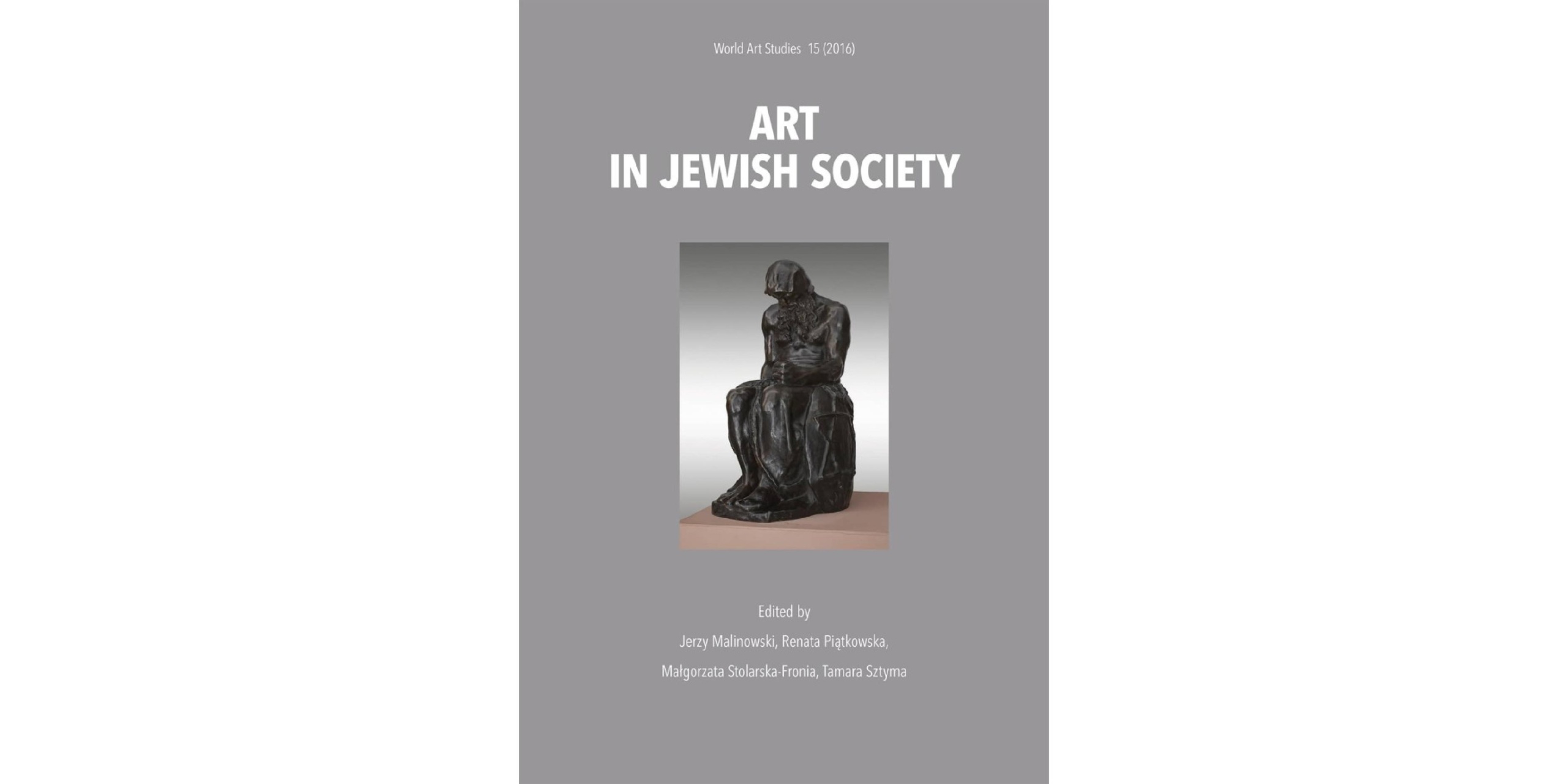
Vol. XV – Art in Jewish Society, JERZY MALINOWSKI, RENATA PIĄTKOWSKA, MAŁGORZATA STOLARSKA-FRONIA & TAMARA SZTYMA (eds.)
Contents: JERZY MALINOWSKI, Introduction; I. ARTISTIC IDEAS IN JEWISH SOCIETY: RENATA PIĄTKOWSKA, A shared space. Jewish students at the Warsaw Academy of Fine Arts (1923–1939); Aviv Livnat, Far Undzere Kinstler (For Our Artists). Tea Arciszewska and the Jewish artists; JOANNA MATYJASEK, Functions of traditional Jewish paper-cutting in the past and their modern-day changes; IZABELLA POWALSKA, Samuel Hirszenberg and the Zionism; ARTUR KAMCZYCKI, From Mentsh to Macho. Zionism, Gender and the gender; EUGENY KOTLYAR, „If I forget Thee, Jerusalem.” Eastern European synagogue decorations in the Zionist paradigm; TAMARA SZTYMA, Unrealised projects. Plans for Jewish monuments before 1939; II. SOCIETIES IN ARTISTS’ EYE: WILLIAM GILCHER, The artist and the patron: Izrael Lejzerowicz and the Margolin/Spektor family in pre-war Lodz; DOMINIKA BUCHOWSKA, Jewish themes in David Bomberg’s early works; MAŁGORZATA STĘPNIK, The artist, the explorer, the initiate. Spiritual journeys of Maya Deren; GAIL LEVIN, Theresa Berenstein (1890–2002): A Krakow-born Jewish Artist in America; TERESA ŚMIECHOWSKA, Master and apprentice. The photographic work of Alter Kacyzne and Menachem Kipnis – influences, similarities, differences, and a life cut short; IRINA OBUCHOWA-ZIELIŃSKA, Henryk Stifelman, the Warsaw architect in the context of his time; III. SOCIAL ENCOUNTERS AND SEARCH FOR THE SELF: MAŁGORZATA STOLARSKA-FRONIA, Ludwig Meidner – a hyperbaroque expressionist; MONIKA CZEKANOWSKA-GUTMAN, Dialogue with Christian art: The Pietà in early 20th-century Jewish art; IRENA KOSSOWSKA, In search for cultural identity: Bruno Schulz, Debora Vogel and Giorgio de Chirico; ZIVA AMISHAI-MAISELS, Chagall’s Jewish identity; SERGEY R. KRAVTSOV, Synagogue architecture of Volhynia: a search for identities; HAIM FINKELSTEIN, E. M. Lilien: Between Drohobych and Brunswick; INA KHISAMOVA, The role of Kazan Art School in a formation of a creative destiny of the sculptor Yankel Katz; ELEONORA JEDLIŃSKA, The art of life and the art: Eugenia (Gina) Pinkus-Szwarc and Marek Szwarc; IV. WHEN JEWISH ART MEETS HISTORY; VITA SUSAK, “Laocoon: or the Limits” of pogroms representation in visual arts (first third of the 20th century); BATYA BRUTIN, Lea Grundig: Duality between political and Jewish identity – 1933–1939; KARINA SIMONSON, Historical memory in the work of South African Litvak photographers; MAYA BALAKIRSKY-KATZ, Cartooning citizen collaboration: A 1949 Jewish war film in Moscow; V. DOCUMENTING AND REVISITING JEWISH TRADITION: MAGDALENA KUNIŃSKA, In search of the Jewish identity: Zofia Ameisenowa and research into Jewish iconography and its place in Polish art history discourse; VILMA GRADINSKAITE, History of art collection in Vilnius Jewish Museums: from the Time of the Russian Empire to the Present; JANA ŠVANTNEROVÁ, Prešov Jewish Museum. Communities and individual donors to its collection; ANNA LEBET-MINAKOWSKA, Minister dream or ‘cold’ calculation? History of the Judaica Department of the National Museum in Krakow in the years 1935–1939; ARIANE HANDROCK, Representing and constructing Jewish art: Alfred Grotte as an architect and author; BARRY DOV WALFISH, Otto Schneid and his Archive: A new digital resource for the study of modern Jewish art; REVIEWS: DOMINIKA BUCHOWSKA, Jewish Art in London. Review of the exhibition: Out of Chaos, Ben Uri, 100 Years in London (2 July–3 December 2015), Somerset House, London; REGINA WEINREICH, Degenerate Art: Exile to Extinction.
Polish Institute of World Art Studies & Tako Publishing House, Warsaw–Toruń 2016
ISBN 978–83– 62737–91–8 (318 pp.)