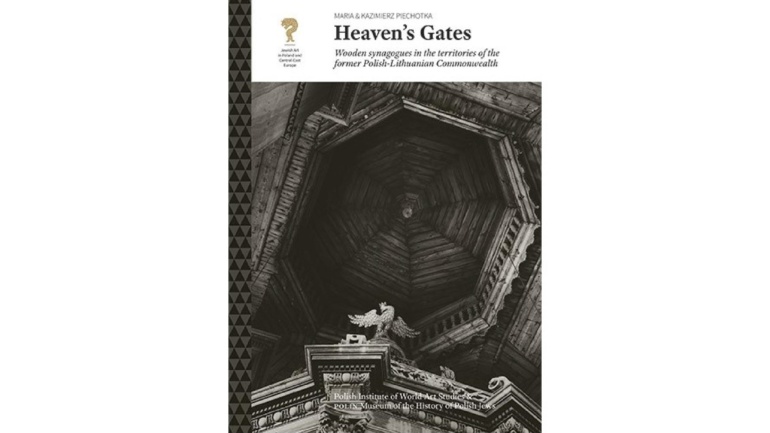
Vol. V – Art of the Islamic World and Artistic Relationships between Poland and Islamic Countries, BEATA BIEDROŃSKA-SŁOTA, MAGDALENA GINTER-FROŁOW & JERZY MALINOWSKI (eds.)
Contents: JERZY MALINOWSKI, Introduction; BEATA BIEDROŃSKA-SŁOTA, Introduction; ZDZISŁAW ŻYGULSKI JR, Poland and Turkey: From enmity to friendship; TOMASZ MIŚKIEWICZ, About Tatars and Moslems on Polish soil; I. ARCHITECTURE: BEKIR DENIZ, Jand city in Kazakhstan and its Caravanserai; ELMIRA GYUL, The Karakhanid Era in the context of the formation of Islamic art in Maverannahr; EKATERINA KIRYUSHKINA, The Spanish-Muslim tradition in monuments of court architecture of Christian Spain in the 14th century; FATIH ELCIL, An Ottoman castle in the Balkans: Szigetvár; MEHMET KEREM ÖZEL, An interpretation of Sinan’s Sehzade complex in Istanbul; ADRIENN PAPP, Building and builder: Constructions under Sokollu Mustafa Pasha’s reign in medieval Buda; TATYANA STARODUB, Peculiar properties of the Safavid faience decoration in two Isfahan royal mosques; MOHAMMAD GHARIPOUR, The image of Safavid garden palaces in European travel accounts; KAYAHAN TÜRKANTOZ, Tendencies in contemporary mosque architecture of Turkey; IMAD OTAHBACHI, Al-Faisaliah Tower: The first skyscraper in Saudi Arabia; II. PAINTING, CALLIGRAPHY AND EPIGRAPHY: GITI NOROUZIAN, A copy of a panegyric biography of Timur, the Zafar-Nama of 935 H, with pictures attributed to Bihzad; SHAKHINA B. IBRAKHIMOVA, The aesthetic ideal in the miniatures of the Ali-Shir Nava’i period; TAMAR ABULADZE, Persian illuminated scientific manuscripts from the National Centre of Manuscripts in Tbilisi; DANIEL REDLINGER, Image without images: Visualization in Islamic epigraphy; SWIETŁANA M. CZERWONNAJA, Muslim epigraphy (tombs with inscriptions) as a phenomenon within the fine arts and architecture (based on the Caucasus, Crimea and Volga-Ural Regions’ materials); III. APPLIED ART: CATIA VIEGAS WESOLOWSKA, Metal mounts on ivories of Islamic Spain; NURIYA AKCHURINA-MUFTIEVA, Basic purposes of Crimean Tatar ornamental art in the context of Islamic symbolism; SERGEY BOCHAROV, ANDREY MASLOVSKY, Decor of the mosques of the Golden Horde towns of the northeastern Black Sea region (on the basis of archaeological data); OLENA FIALKO, SVITLANA BILYAYEVA, Art ceramics of the Islamic world in Ukrainian lands (13th–18th centuries); ANIKÓ TÓTH, Turkish ceramics recovered during the archaeological excavations on the Castle Hill of Buda; BELGIN DEMIRSAR ARLI, HATICE ADIGÜZEL, The connection between the tile decoration of the 16th and 17th centuries in Istanbul with the tile fragments found in Iznik excavations; IVÁN SZÁNTÓ, How to obtain a Persian rug in 17th-century Hungary?; VALIDE PASHAYEVA, Artistic and technical features of Azerbaijan’s kalagai silk scarves; IV. ARTISTIC CULTURE OF THE POLISH-LITHUANIAN TATARS: HARRY NORRIS, Reflections upon Sufi influences within the artistic expression, and in the manuscript documents, of the Belarusian, the Lithuanian and the Polish Tatars; ANDRZEJ DROZD, Decoration in the culture of the Polish-Lithuanian Tatars: A preliminary study; LUCYNA LESISZ, KAROLINA RADŁOWSKA,Tatar monuments in the collection of the Historical Museum in Białystok; MIESTE HOTOPP-RIECKE, The Muslim Tatar cultural legacy in its German-Polish context; V. RELATIONSHIPS BETWEEN THE ART OF POLAND/ CENTRAL-EASTERN EUROPE AND ISLAMIC COUNTRIES: SVITLANA BILYAYEVA, Islamic art in Ukrainian lands (13th–18th centuries); ZDZISŁAW ŻYGULSKI JR, Armenians in Poland: A foreign culture incorporated; JANINA POSKROBKO-STRZĘCIWILK, The 18th-century Polish silk sash and its Oriental prototypes; ELVAN TOPALLI, A meeting of two painters from West and East: Stanisław Chlebowski’s and Osman Hamdi Bey’s paintings of the Green Mosque; TAREK EL-AKKAD, Neo-Islamic architecture in Central and Eastern Europe; VI. ISLAMIC ART IN EUROPEAN COLLECTIONS: AGNIESZKA KLUCZEWSKA-WÓJCIK, A new approach to Islamic art: The collecting of Eastern carpets in Poland at the beginning of the 20th century; HANA NOVÁKOVÁ, Islamic art from Czech collections (with an accent on Iznik pottery); EMESE PÁSZTOR, Ottoman-Turkish and Iranian textiles in the collection of the Museum of Applied Arts in Budapest; MAGDALENA GINTER-FROŁOW, Miniatures from Persian manuscripts: The history of Polish collections; MAŁGORZATA MARTINI, Scissors for Islamic calligraphy as an example of collecting artifacts from other cultures for their exotic origin; VII. MODERN AND CONTEMPORARY ART: MARS AKHMADULLIN, The art of book printing in Arabic type in the Volga-Ural region during the late 19th and early 20th centuries; FUAD PEPINOV, Caricature in Turkic public life under the Russian Empire; OLGA ULEMNOVA, Islam and fine arts of the 1920s in Soviet Russia; RAUZA SULTANOVA, Islamic aesthetics and scenography of the Tatar theatre; DINA KHISAMOVA, The figurative system of Islam in Tatar sculpture; HAMID SEVERI, What is self? Samples of contemporary Iranian photographic self-portraits; VIII. SPIRITUAL HERITAGE OF THE ISLAMIC WORLD: VLADIMIR KOSHAEV, “Stepsons of the Urals”: The Turkic-Finnish incorporation in the culture of the Bessermans; OTHMAN YATIM, Architecture and other Islamic arts, particularly in Malaysia: Unity in diversity.
Polish Institute of World Art Studies & Manngha Museum of Japanese Art and Technology, Kraków 2011 (2012)
ISBN 978-83-62096-11-4 (500 pp.)