

Aims and mission
The Polish Institute of World Art Studies combines the features of a research institute with those of an association. Members of the Institute include art historians, conservators of artworks, architects, ethnologists, specialists in theatre and cultural studies, and those interested in art outside the canon of traditional 19th century Western European art.
The Institute’s activities are based upon a conviction regarding the necessity for research into the diverse forms of artistic expression which appear in global cultures, both in art deriving from sophisticated aesthetic systems, as well as in art which is an expression of tribal, folk and non-professional creativity.
We aim to:
- initiate and realise research into the art and culture of Asia, Africa, the two Americas, and Oceania,
- support researchers while creating a platform for the exchange of information, both in Poland and abroad,
- promote methodological reflections upon research into art in a global context.

History
The Polish Institute of World Art Studies came into being as a result of the union of two organisations – the Association for Contemporary Art, in Toruń, and the Polish Association for the Art of the Orient, in Warsaw. The symbolic date marking the beginning of the activities of the Institute is accepted as 28 March 2000 – the date of the foundation of the Association for Contemporary Art by academic staff and research students of the Faculty of Fine Arts of the Nicolaus Copernicus University in Toruń. This organisation commenced intensive scholarly activity, organising conferences as well as producing publications devoted to modern art in Poland, and occasionally in Central and Eastern Europe as well.
The Polish Association for the Art of the Orient was founded in Warsaw in 2006, with sections in Kraków, Toruń and Warsaw. Its activities were a continuation of research and organisational work begun in 2002 by the Workshop for the Art of the Orient at the Nicolaus Copernicus University and the Faculty of Byzantine and Post-Byzantine Art at the Cardinal Stefan Wyszyński University in Warsaw. The Polish Association for the Art of the Orient initially concentrated on the arts of Asia, but, in response to academic requirements, systematically broadened the range of its activities to embrace the art of Africa, Byzantine and Post-Byzantine art, and the art of national minorities in Poland and in East-Central Europe, including that of the Armenians, Tatars and Jews. In 2007 the Section for the Art of Central and South America was inaugurated within the Association.
Union between the two Associations took place in 2011, together with the registration of the Polish Institute of World Art Studies. The result of this was the establishment of an institution with a unique character, combining the features of an association with those of an interdisciplinary research centre covering a broad, intercultural range of fields.
In 2017 the Institiute was recognised as a scientific entity on the basis of a decision by the Minister for Science and Higher Education. Its status as a research centre with the character of “a specific subject chiefly undertaking scientific activity in an independent and continuous manner” was positively evaluated by the Commission for Evaluating Science and confirmed by a decision by the Minister of Education and Science in 2022.
There are at present 140 individuals are associated with the Institute, including 32 professors and assistant professors, together with 61 individuals with doctorates.
The Institute undertakes wide-ranging research, publishing and didactic activities, including lectures, seminars and group meetings. Its structure embraces sections in Gdańsk, Kraków, Łódź, Toruń and Warsaw, together with numerous research and editorial groups. The Institute actively collaborates with institutions of higher education, research institutes, museums and scientific associatons both in Poland and abroad. It also possesses its own Artistic-Scientific Outstation in Okayama, in Japan.
Contact
Polish Institute of World Art Studies
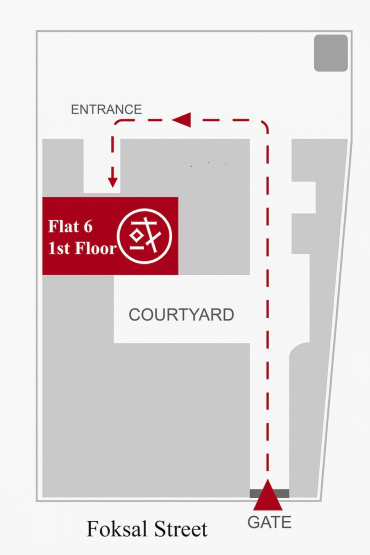
ul. Foksal 11 – 6
00-372 Warszawa
Poland
address for correspondence:
ul. Warecka 4/6 – 10
00-040 Warszawa
Poland
KRS 0000390292
NIP 5252514528
REGON 144081745
ACCOUNT NUMBER :
CREDIT AGRICOLE 24 1940 1076 3101 7420 0000 0000
SWIFT CODE AGRIPLPR
Structure
CENTRAL ADMINISTRATION
biuro@world-art.pl
Director
prof. dr hab. Jerzy Malinowski
j.malinowski@world-art.pl
Deputy Director
prof. dr hab. Anna Markowska
Deputy Director
dr Agnieszka Kluczewska-Wójcik
Deputy Director
dr hab. Hanna Rubinkowska-Anioł
Secretary
dr Joanna Wasilewska
Treasurer
dr Magdalena Ginter-Frołow
Członek zarządu (for Membership and Subscriptions)
dr Magdalena Tarnowska
Member of Administration (for Organisational Matters)
dr Karolina Wolska-Pabian
Member of Administration (for Publications)
red. Grażyna Raj
SCIENTIFIC COMMISSION
Chairman
prof. dr hab. Jerzy Uścinowicz
GDAŃSK SECTION
Director
dr hab. Bogna Łakomska, prof.
Deputy Director
dr Zofia Krasnopolska-Wesner
Deputy Director
dr Dorota Grubba-Thiede
Treasurer
dr Aleksandra Kajdańska
KRAKOW SECTION
Director
dr Ewa Kamińska
Deputy Director
dr Małgorzata Reinhard-Chlanda
Deputy Director
dr Agnieszka Staszczyk
Secretary
Aleksandra Görlich
Treasurer
Małgorzata Martini
ŁÓDŹ SECTION
Director
dr hab. Eleonora Jedlińska, prof.
Deputy Director
dr Ewa Kubiak
Secretary
Magdalena Milerowska
Treasurer
dr Agnieszka Świętosławska
TOUŃ SECTION
Director
dr hab. Katarzyna Kulpińska, prof.
Deputy Director
dr Filip Pręgowski
Deputy Director
dr Magdalena Nierzwicka
Secretary
dr Emilia Ziółkowska
Treasurer
dr Anna Dzierżyc-Horniak
Członek
dr Małgorzata Geron
Członek
dr hab. Dorota Kamińska-Jones, prof.
WARSAW SECTION
Director
p.o. Teresa Śmiechowska
Deputy Director (przedstawiciel w Lublinie)
dr hab. Małgorzata Stępnik, prof.
Deputy Director
Secretary
dr Dominika Macios
Treasurer
Ewa Orlińska-Mianowska
Membership
In order to join the Polish Institute of World Art Studies, please fill in the membership application form and send it to the e-mail address: biuro@world-art.pl
Membership subscription is 20 PLN monthly. There is a reduced subscription for students, doctoral researchers and pensioners of 10 PLN monthly.
The account for membership subscriptions:
CREDIT AGRICOLE
24 1940 1076 3101 7420 0000 0000
SWIFT CODE: AGRIPLPR
Statute
Statute of the Polish Institute of World Art Studies
- Polish Institute of World Art Studies, hereinafter referred to as ”Organization”, is a scientific organization bringing together art historians, art conservators, ethnologists, cultural theorists, theatrologists and film scholars, interested in visual culture, and representatives from related fields, involved in the study and conservation of art and the world culture heritage.
- The name of the Organization is proprietary.
I. Area of operation, the seat
§1
The seat of the Organization is the city of Warsaw.
The operation area of the organization is the country of Poland. For the proper implementation of its goals the Organization may conduct its activities abroad.
§2
The organization is a legal entity. It conducts its activities under the provisions of the Act of 1989-04-07 Law on Associations (Journal of Laws 1989 No. 20, item. 104, as amended) and of this Statute.
The Organization is established for an unlimited period.
§3
The Organization uses a seal with the words ”Polski Instytut Studiów nad Sztuką Świata – Zarząd” (Polish Institute of World Art Studies – Management Board)
II. Objectives and forms of activity
§4
The purpose of the Organization
is the activity in the field of public tasks, including research of world art, protection of cultural goods and traditions and popularization of tangible and intangible cultural heritage of the world’s cultures.
The activities referred to in paragraph 1 shall be carried out for the benefit of the general public and are the statutory activities of the Organization.
§5
The activities of the Organization shall include in particular:
1. research in the field of art history and artistic culture, ethnology and related fields of:
1 /. Asia,
2 /. Africa,
3 /. Europe, including:
- Byzantium, Eastern Christianity on the border of Asia and Europe
- Central, Eastern and South-Eastern Europe and the Caucasus,
- national minorities of eastern origin (such as Armenians, Tatars, Jews)
- artistic contacts with other parts of the world,
- stocks of world art in European collections
4 /. North America, including:
- artistic contact with other parts of the world,
- stocks of world art in American collections
5 /. Central and South America, especially since the colonial era,
6 /. Australia and Oceania.
2. research in the field of conservation – restoration of world cultural heritage,
3. research in the field of contemporary global art and visual culture,
4. research in the field of world thought on art and art criticism.
§6
The Organization achieves its objectives by:
1 /. scientific research and documentation of world art in the field of the history of painting, sculpture, graphic arts, architecture and urban planning, gardens, craftsmanship and artistic industry arts, photography, thought on art, as well as contemporary art and audio-visual culture,
2 /. organization of academic life and international cooperation, including scientific meetings, national and international conferences and conservation workshops,
3 /. collecting documentation of scientific events, exhibitions and artistic activities,
4 /. publication of magazines (or scientific booklets) research reports, books, directories, collection catalogs and a printed or online bulletin,
5 /. development of conservation methods of works of art,
6 /. protection and conservation – restoration of works of art and monuments of culture,
7 /. conducting rescue conservation missions and building documentation of threatened works and monuments of world cultural heritage,
8 /. organization of art exhibitions,
9 /. teaching and popularization of art and conservation of the world cultural heritage,
10 /. integration of the circles art historians, art conservators, representatives of related disciplines, as well as museum staff and curators of art exhibitions,
11 /. advisory activities and providing expert analyses,
12 /. organization of competitions for academic papers, conservatory and student papers.
§7
The organization may start scientific, conservatory and didactic cooperation, based on agreements or as a part of scientific networks with Polish and foreign institutions and associations, as well as with international organizations for the purposes of joint research, conservation and rescuing of world cultural heritage.
The Organization may join international scientific and conservatory organizations in the field associated with its activities.
The Organization may cooperate with state institutions, local governments and NGOs.
The organization may have its accredited representatives and correspondents, who are its members, in foreign research and conservatory centers in the field associated with its activities.
The Organization may undertake scientific and conservatory missions abroad, as well as conservatory workshops based on international agreements, grants and domestic or foreign subsidies, or from its own funds.
§8
1. The Organization bases its activities primarily on work contributed by its members.
2. In order to conduct its affairs the Organization can hire employees.
3. To fulfill its statutory objectives, in particular to realize conservatory missions abroad, the Organization can benefit from the work of volunteers in accordance with the Law on Public Benefit and Volunteer Work.
§9
Within the structure of the Organization there shall be a separate unit – Centre of World Art Studies, hereinafter referred to as the “Center”, implementing statutory, research, editorial and educational goals of the Organization.
III. The authorities of the Organization
§10
The management structure of the Organization consists of:
1 /. The General Meeting of the members of the Organization, hereinafter referred to as “General Meening”
2 /. The Management Board of the Organization, hereinafter referred to as “the Board”
3 /. The Audit Commission.
§11
1. The General Meeting shall adopt resolutions by majority vote in the presence of at least half of those entitled to vote, and in the second voting by ordinary majority of votes. Notice of the second voting date should be pre-specified in the notice convening the General Meeting.
2. The General Meeting is valid regardless of the number of the Members of the Organization present, provided that they had all been duly notified of its date.
§12
Voting shall be public, unless the individual authorities adopting the resolution decide otherwise.
§13
The General Meeting as the supreme authority of the Organization, in particular:
1 /. adopts rules of procedure of the General Assembly,
2 /. decides on the amount, deadlines and ways of payment of membership fees,
3 /. appoints and dismisses the Board and the Audit Committee or individual members of these bodies,
4 /. appoints for a three year term and dismisses the Director and Deputy Director of the Centre, unless these functions are performed by the president and vice-president for cooperation with museums, cultural institutions and associations, after obtaining the opinion of the Scientific Council,
5 /. approves the action plans submitted by the Executive Board,
6 /. evaluates the activities of the Organization and its authorities,
7 /. reviews and approves reports of the Management Board and the Audit Committee,
8 /. grants vote of approval to the resigning Board,
9 /. considers appeals against resolutions of the Board to expel a member of the Organization,
10 /. makes changes in the statutes,
11 /. decides on the termination of the Organization and allocation of its assets,
12 /. passes resolutions in all matters outside the responsibility of other authorities of the Organization.
§14
The members participate in the General Meeting as:
1 /. ordinary members – with a casting vote
2 /. associate members – in an advisory capacity,
3 /. honorary members – in an advisory capacity.
§15
1. The General Meeting shall be convened by the Board.
2. The Board is obliged to inform the members in writing or via Internet about the time, place and program of the Meeting, not later than 14 days before its scheduled date.
The General Meeting may adopt a different agenda than the one set forth by the Board.
3. The General Assembly is convened at least once a year.
§16
At the request of the Audit Committee or the absolute majority of the Organization members, the Board is obliged to convene an Extraordinary General Meeting within 20 days of receipt of the request.
§17
During the period between General Meetings, the Board manages the work of the Organization.
§18
The Board, in particular:
1 /. adopts the rules of the Board, subsequently approved by the General Meeting,
2 /. performs the resolutions of the General Meeting,
3 /. develops action plans of the Organization,
4 /. manages the assets of the Organization,
5 /. develops reports from activities of the Organization and submits them to the General Meeting for approval,
6 /. convenes the General Meeting,
7 /. admits new members to the Organization,
8 /. passes resolutions to expel a member from the Organization,
8 /. represents the Organization,
9 /. appoints managers of sections, editorial boards and other departments of the Centre for three years,
10 /. appoints the Organization Office.
Resolutions of the Board are adopted by a majority vote of at least half of the members of the Board.
§19
1. As Board members may be appointed natural persons who are ordinary members of the Organization.
2. The Board consists of a president, three vice-presidents, secretary, treasurer and three members of the Management – proxies, selected by voting in the General Assembly.
§20
The President:
1 /. directs the activities of the Organization, including the Centre, unless the General Assembly decides otherwise after consulting the Scientific Council
2 /. is responsible for the scientific activities of the Organization,
3 /. is responsible for publishing activity,
4 /. supervises the organization of national and international scientific conferences and seminars,
5 /. supervises the cooperation with domestic, foreign and international universities and research centers.
Vice President of cooperation with museums, cultural institutions and associations:
1 /. replaces the President in directing the activities of the Organization, including the Centre, unless the General Assembly decides otherwise after consulting the Scientific Council
2 /. is responsible for cooperation with national, foreign and international museums, cultural institutions and associations,
3 /. is responsible for collecting scientific documentation of events, exhibitions and artistic activities and oversees the Organization’s bulletin.
4 /. is responsible for organizing exhibitions
5 /. supervises the popularization activities,
6 /. is responsible for competitions for the scientific, conservatory and student papers.
Vice President of Conservation: 1 /. is responsible for cooperation with national, foreign and international institutions and laboratories of art and historic monument conservation, 2 /. oversees maintenance workshops, 3 /. oversees conservatory, research and documenting activities in the field of conservation of works of art and historic monuments conducted by the Organization, 4 /. oversees the conservatory missions abroad.
4. Vice President of modern art:
1 /. is responsible for research on modern and contemporary art,
2 /. is responsible for national and international cooperation in a/m field,
3 /. oversees conferences and other activities of the Organization in a/m field,
4 /. is responsible for the website of the Organization.
Secretary:
1 /. oversees the current activities of the Organization, including the Organization Office,
2 /. is responsible for correspondence and domestic and foreign materials exchange,
3 /. oversees the foreign exchange of scientific researchers and conservators,
4 /. is responsible for advertising of the activities of the Organization, including the relations
with institutions of public life, the press, radio and television.
Treasurer: 1 /. is responsible for the financial activities of the Organization and oversees the payment of membership fees, 2 /. oversees the business activity of the Organization, 3 /. is responsible for the preparation of speeches and grant applications, research and conservatory grants, supervises their implementation and reporting.
Three members of the Board – Proxies
1 /. are responsible for contacts with branches of the Organization,
2 /. supervise the Organization membership issues,
3 /. oversee the activities the Youth Section.
4 /. guide and supervise the activities of the Organization in the ranges determined by the Board.
§21
1. The term of the Board lasts three years. 2. Each ordinary member of the Organization may be a member of the Board several times. 3. The General Meeting may by way of resolution revoke individual members of the Board before the end of term. 4. If necessary to complete the Board, the General Meeting carries out a complementary vote by way of resolution.
§22
1. The Organization shall be represented by at least two members of the Board – President, Vice-Presidents, Secretary or Treasurer.
2. For the validity of a declaration of intent, letters and documents concerning the rights and obligations of the Organization are required signatures of two members of the Board: President, Vice-Presidents and Treasurer.
3. For shipping and receiving other papers and documents on behalf of the Organization President entitled are the President, Vice-Presidents and Secretary of the Board.
§23
The activities of the Organization are controlled by the Audit Committee.
§24
1. The Audit Committee shall, in particular:
1 /. at least once every six months control focus, honesty, thriftiness, legality of the Organization’s activities,
2 /. submits to the Board and to the General Meeting the report and conclusions of the audits carried out,
3 /. submits to the General Meeting proposals for awarding the vote of approval to the resigning Board,
4 /. in an advisory capacity may participate in meetings of the Board.
2. Resolutions of the Audit Committee by a majority vote in the presence of all its members.
§25
1. The members of the Audit Committee may be ordinary members the Organization.
2. The Audit Committee consists of three members.
3. The Audit Committee shall elect from its members a chairman, vice-chairman and secretary.
4. If necessary, the General Meeting shall by resolution complete the composition of the Audit Committee,
5. The members of the Audit Committee cannot perform any other functions in the Organization.
6. The Audit Committee operates pursuant to its by-laws.
§26
1. The term of the Audit Committee shall be three years.
2. Each ordinary member of the Organization may be a member of the Audit Committee several times.
3. The General Meeting may revoke by way of resolution the Audit Committee or its individual members before the end of the term.
§27
1. The General Meeting, at the request of at least five ordinary members appoints local branches.
2. The General Meeting of Members of the Branch:
l /. adopts rules of procedure of the General Meeting,
2 /. appoints and dismisses the Branch Board,
3 /. approves action plans submitted by the Branch Board,
4 /. evaluates the activities of Branch and its authorities,
5 /. reviews and approves reports of the Branch Board,
6 /. grants vote of approval to the resigning Board,
7 /. appoints the Branch Audit Commission, consisting of three ordinary members of the Organization, if the department has obtained legal personality.
3. Resolutions of the Branch General Meeting are passed by a simple majority vote in the presence of more than half of those entitled to vote.
4. The General Meeting of Branch Members elects the Branch Board for three-year term. The Branch Board is composed of a president, two vice presidents, secretary and treasurer by way of resolution passed by a simple majority of votes in the presence of more than half of those entitled to vote.
5. If necessary to complete the Board, the General Meeting carries out a complementary vote by way of resolution.
6. The Branch Board:
1/. Manages the activities of the Branch, implementing the statutory goals of the Organization,
2 /. adopts the rules of the Board, subsequently approved by the General Meeting,
3 /. performs the resolutions of the General Meeting of the Branch Members,
4 /. develops action plans of the Branch,
5 /. manages the assets of the Branch,
6 /. develops reports from activities of the Organization Branch and submits them to the Branch General Meeting for approval,
7 /. convenes the General Meeting of Branch Members,
7. Resolutions of the Board are adopted by a majority vote of more than half of the members of the Board.
8. The Branch may obtain legal personality.
9. The Branch uses a seal with the words „Polski Instytut Studiów nad Sztuką Świata – Oddział …….” (Polish Institute of the World Art Studies – branch ..) with the adjectival designation of its headquarters.
10. The Branches of the Organization may be members of the local and regional community organizations of converging purposes.
11. The activity of Branches are controlled by the Audit Committee of the Organization which submits to the meeting of its members reports and resolutions concerning granting vote of approval to the resigning Branch Board. If a given Branch has a legal personality, its activity is controlled by the Branch Audit Commission, appointed by the General Meeting of Branch members according to the principles set out respectively in paragraph 24-26.
§28
Within the Organization may be active the Youth Circle, gathering students of art history, cultural heritage protection, conservation of works of art and related fields, carrying out independent
scientific activity, organizing conferences and scientific exchange. Youth Circle operates under its by-laws.
IV. Members, their rights and obligations
§29
1. Members of the Organization may be
1 /. full
2 /. extraordinary
3 /. honorary.
2. As a Member of the Organization may be listed also a citizen of another country, resident and non-resident in the Republic of Poland, supporting and implementing the statutory objectives of the Organization.
3. A legal person can only be an extraordinary member of the Organization. It operates in the Organization through its representative.
§30
An ordinary member may be a natural person with full legal capacity and not deprived of civil rights, accepting the statutory objectives of the Association, which conducts scientific and conservatory activities in the field of art history and related disciplines or otherwise wishes to participate in the achievement of its objectives.
§31
1. As an associate member may be listed a natural person who supports the objectives of the Organization, or a legal person: scientific and cultural institution with convergent objectives, which declared financial, or labor aid to the Organization.
2 . As an associate member may be listed a student of the disciplines referred to in § 9 p. 3 who will undertake work in the Youth Circle.
§32
A natural person of particular merit in achieving the objectives of the Organization may be an honorary member.
§33
1. The ordinary and extraordinary membership is acquired through submission to the Board of a written declaration of the will to join the Organization (the declaration should specify the type of membership). The resolution on the admission of members is adopted by the Board after consulting the Audit Committee.
2. The resolution to grant honorary membership is adopted by the General Meeting in absolute majority vote at the request of at least five full members of the Organization.
§34
A full member has the right to:
1 /. participate in the activities of the Organization and to participate in the General Meeting,
2 /. submit proposals, opinions and postulates concerning the activities of the Organization,
3 /. elect and be elected to the Board and the Audit Committee.
§ 35
Associate Member has the right to:
1 /. participate in the work of the Organization,
2 /. participate in the General Meeting in an advisory capacity,
3 /. submit proposals, opinions and postulates concerning the activities of the Organization.
§ 36
An honorary member has the right to:
1 /. participate in the meetings and proceedings of the General Meeting of the Organization in an advisory capacity,
2 /. submit proposals, opinions and postulates concerning the activities of the Organization.
§37
1. The full and extraordinary member is required to actively participate in the activities of the Organization and abide by the Statute and resolutions of the authorities of the Organization, and in particular timely pay membership fees and other benefits enacted by the authorities.
2. Honorary member is exempt from paying membership fees.
3. A member who is a student or graduate student pays 50% of the regular fee.
§38
Membership shall be lost due to:
1 /. submitting a written declaration to the Board on a voluntary withdrawal from the Organization
2 /. exclusion because of not paying membership fees for a period of two years, despite being twice reminded in writing,
3 /. exclusion because of the action to the detriment of the Organization,
4 /. deprivation of public rights pursuant to valid court judgment,
5 /. death of natural person
6 /. loss of legal personality by an extraordinary member,
7 /. honorary membership acquired by a resolution of the General Assembly.
§39
1. Exclusion from the Organization shall be determined by resolution of the Board.
2. The Board hands or sends by ordinary mail to a member a written notice of the resolution on the exclusion.
3. A member concerned by resolution on the exclusion may submit to the Board a written appeal within 14 days from the handing or sending the notice.
4. An appeal against a decision of the Board of be is reviewed by the General Assembly.
5. Exclusion of a member from the Organization will become effective on the expiry of the deadline for filing an appeal or, if the member submits the appeal, on adoption by the General Meeting a
resolution on the exclusion.
V. Center of World Art Studies
§40
Pursuant to the provisions of § 9, the Centre has been set up for the implementation of statutory scientific research, publishing and teaching objectives of the Organization.
§ 41
The organizational structure of the Centre, consisting of departments and research laboratories, editorial offices, archive and library, is determined by the Board after obtaining the opinion of the Scientific Council. The Board also defines the rules of procedure.
§ 42
The center conducts educational activities on its own or in cooperation with universities, institutes and research centers or cultural institutions, including nationwide doctoral seminars, postgraduate studies, conservatory workshops. The scope and form of teaching activities is determined by the Board after obtaining the opinion of the Scientific Council.
§ 43
Unless the General Meeting decides otherwise, the President of the Organization assumes the position of the Director, and vice-president for cooperation with museums, cultural institutions and associations takes the position of the Deputy Director. Choosing other people for the position of Director and Deputy Director follows obtaining the opinion of the Scientific Council.
§ 44
The Center may employ full-time researchers. In the name of the Center employment contracts are signed by its director.
§ 45
The Director manages all the activities of the Centre. He represents the Center and signs agreements concerning the activities of the Center.
§ 46
The professional supervision over the work of the Center is exercised by the Scientific Council.
VI. The Scientific Council
§ 47
The Scientific Council, hereinafter referred to as the Council, shall exercise supervision over the activities of the Organization, including the Centre, and programming of the research, publications and teaching activities, ensuring high level of its operations. The Council shall meet at least once a year.
§ 48
1 The Council consists of professors and habilitated doctors who are members of the Organization, subject to confirmation by the General Meeting. Its activities are directed by the Head, who is elected by the Council. The Board shall elect a secretary who holds a doctoral degree.
2 The Council invites to its sessions the Board members, presidents of branches and departments of managers and employees having a doctorate.
§ 49
The Council is appointed for a three years term.
§ 50
During the term of the Council may be supplemented by new members approved by the General Meeting.
VII. Assets of the Organization
§ 51
The assets of the Organization consist of real estate, movable property and financial means.
§ 52
The source of the assets of the Organization are: income from membership fees, domestic and foreign subsidies, grants and funding for research and conservatory work, donations, legacies, bequests, income from Organization’s property and the public generosity.
§ 53
1. The organization may conduct business. Income from economic activity shall serve statutory purposes and must not be available for distribution to members.
2. The organization manages its finances and accounting in accordance with applicable regulations.
VIII. Amendments to the Statutes, dissolution the Organization
§ 54
Amendments to the Statute are made by way of resolution of the General Meeting.
§ 55
The dissolution or transformation of the Organization and allocation of its assets are determined by resolution of the General Meeting. The assets of the Organization will be passed in such case to an association of similar nature.
§ 56
To all matters not settled herein appropriate provisions of the Law on Associations shall apply respectively.
§ 57
The organization acquires legal personality upon registration in the National Court Register.